Why We Should Not Criticize Our Children
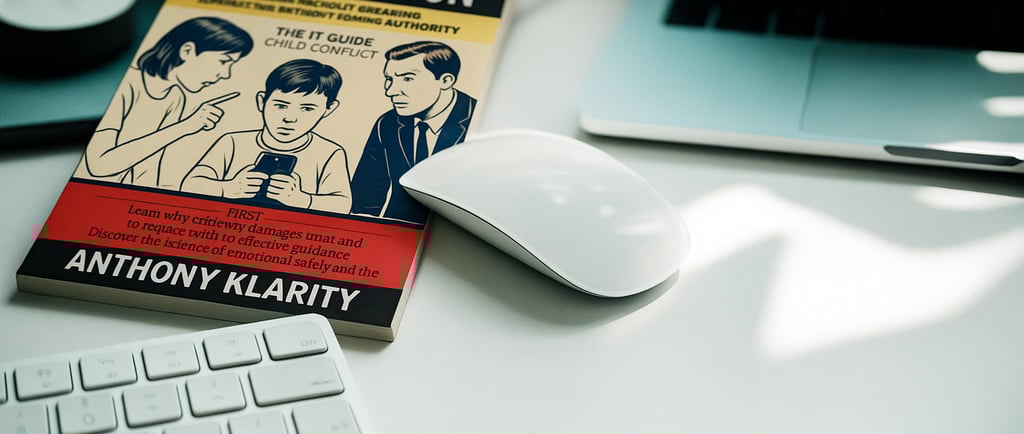
Criticism is one of the easiest things a parent can reach for. It slips out when we’re tired, overwhelmed, frustrated, or carrying our own old wounds. But to a child, criticism never feels like guidance — it feels like rejection. A child does not dissect our words; they absorb the message underneath. And that message, when spoken in anger or disappointment, quietly whispers: “You are not enough.” This is the moment the connection between parent and child begins to fracture. Not loudly, not dramatically, but gently — like a small crack on glass that spreads over time. Psychology and neuroscience are clear: when a child feels criticized, their brain shifts into protection mode. The amygdala activates, the nervous system tightens, and learning shuts down. In that moment, a child is not thinking about what they did wrong. They are thinking about whether they are safe, accepted, loved, and worthy. Criticism does not teach better behavior; it teaches fear. And children respond to fear in only a few predictable ways — they withdraw, they explode, or they begin to bury shame deep inside themselves. What’s even more heartbreaking is that children are not born with these wounds. We give them ours. Not because we are bad parents, but because nobody taught us another way. Every time we choose criticism instead of curiosity, the child silently writes a belief about themselves: “When I fail, love disappears.” “When I show my real self, I get corrected.” “To be worthy, I must be perfect.” These quiet conclusions shape their self-esteem, their confidence, and the way they will move in this world for years to come. And yet, it is possible — beautifully possible — to guide a child without hurting them. A boundary is not criticism. A correction is not rejection. Guidance says, “This behavior is not okay.” Criticism says, “You are not okay.” One teaches responsibility. The other creates insecurity. Children grow not from fear, but from emotional safety. When a child feels seen and understood even in their mistakes, something extraordinary happens. They become braver. More open. More cooperative. Their nervous system relaxes, their brain reopens, and their behavior improves not because they are frightened, but because they feel connected. A child who feels safe does not become spoiled — a child who feels safe becomes confident. Behind every difficult behavior is a need. Behind every outburst is an emotion too big for a small body. Behind every “misbehavior” is a young person learning how to function in a complicated world. They are not trying to be difficult — they are asking for help in the only language they currently know. When a parent chooses empathy over attack, the child does not lose respect; they gain trust. And trust is the soil in which every healthy behavior grows. This is the transformation so many families are longing for — a shift from correcting the child’s behavior to understanding the child’s heart. When a parent learns to pause rather than react, to connect rather than criticize, something softens in the home. Voices become gentler. The atmosphere becomes warmer. Children begin to approach instead of avoid. The relationship becomes a place of safety instead of fear. Everything changes when a child no longer feels judged for being imperfect, but supported while learning how to be human. This flowing truth — this quieter, deeper way of raising children — is explored in full inside the book From Criticism to Connection. If you want to understand what truly happens inside a child’s brain when they are criticized, how their sense of identity forms, how to discipline without shame, how to restore trust, how to speak in a way that strengthens rather than wounds, and how to heal your own inner patterns so they do not echo into the next generation, the complete system is there. This article is only a doorway. The deeper understanding, the practical tools, the emotional language, and the healing process live inside the book. Discover the full transformation in From Criticism to Connection by Anthony Klarity — a book for families who want to raise children with closeness, confidence, and emotional safety.
Anthony Klarity
12/5/20251 min read
Quiet focus.
Connect
Stay updated with insights and stories
Contact
+44 777 861 09 83
© 2025. All rights reserved.